

Steel Lintels for Australian Homes | How to Choose
A lintel is the beam that carries the load above a door, window or other opening, and for most Australian homes steel is the material that does it best. Steel lintels span wider openings, carry heavier loads and install faster than the alternatives, and when they are coated for their environment they last the life of the building.
This guide explains what a lintel does, how the materials compare, and what to look for when you are choosing a steel lintel for a Queensland build.

What is a lintel?
A lintel is a horizontal beam spanning an opening in a wall. It acts as a bridge, carrying the weight of the wall, floor or roof above the opening and transferring it to the supports on either side. Without a lintel, that load would bear down on the opening itself and crack or crush the structure around it. Every door, window and archway in a masonry or brick-veneer home relies on one.

What are lintels made from?
Lintels come in several materials, each with a sensible use and its own limits.
| Lintel material | Best suited to | Considerations |
|---|---|---|
| Steel | Wide openings, heavier loads, fast install | Needs the right coating for its exposure |
| Concrete | Standard door and window openings, fire resistance | Heavier, supplied precast or cast in place |
| Timber | Small spans and low-load openings | Vulnerable to fire, decay and pests |
| Brick and reinforced brick | Moderate spans in masonry | Limited load capacity without steel reinforcement |
For most modern Australian homes, the practical choice for openings that carry real load comes down to steel or concrete, and steel wins on span, weight and speed.
Why steel lintels for Australian homes?
Steel earns its place for four reasons. Its strength-to-weight ratio lets it span wider openings than timber, brick or concrete of the same size. It carries heavy loads, which matters over garage doors and large window and door openings. It installs fast, because pre-fabricated lintels arrive ready to place rather than being cast or built on site. And it suits complex designs, because steel can be made to the shape and size the opening needs.
You can see the principle on our own projects. On the Ormiston house project, a steel beam carried the wall framing and brickwork above the garage door, which is a lintel doing exactly this job at a larger scale.

What to look for in a steel lintel in Queensland
In Queensland, the single biggest factor beyond load and span is corrosion protection. A lintel over an external opening is exposed to the weather, and in coastal and bayside areas it faces salt air as well. That means the lintel needs a durability rating matched to its corrosivity zone, which usually means hot dip galvanising for external and higher-exposure openings.
The other two things worth checking are availability and compliance. An off-the-shelf lintel that is in stock and ready to install keeps your job moving, rather than waiting on fabrication. And a lintel that is certifier-ready, with its durability rating documented, makes sign-off straightforward.
The SMART Lintel
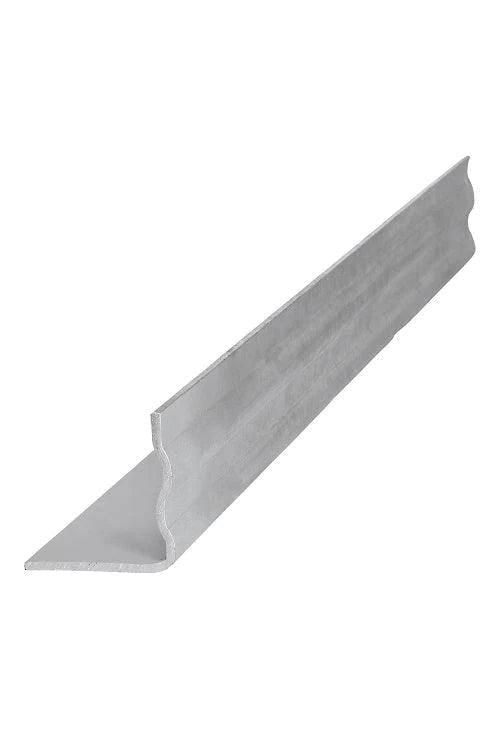
The SMART Lintel™ is Network Steel's answer to all three. It is pre-engineered and certifier-ready, so the compliance work is already done. It comes galvanised, including a double-ribbed profile, which suits the higher corrosivity zones common across coastal South East Queensland. And it is available off the shelf, ready to install, so there is no waiting on custom fabrication for a standard opening. For builders, that means fewer decisions and no surprises at certification.
FAQ
What is a lintel used for?
A lintel carries the load above an opening such as a door, window or archway, and transfers that weight to the supports on either side. It stops the load bearing down on the opening and cracking the structure around it.
Are steel lintels better than concrete?
For wider openings and heavier loads, steel generally performs better because of its strength-to-weight ratio, and it installs faster as a pre-fabricated component. Concrete offers good fire resistance and suits standard openings, but it is heavier. The right choice depends on the opening and the load.
Do steel lintels need to be galvanised?
Steel lintels over external openings, and especially in coastal and bayside areas, should be galvanised to protect against corrosion. The level of protection is matched to the site's corrosivity zone.
What does an R4 lintel mean?
R1 to R4 are durability ratings tied to corrosivity. R4 is the highest, suited to the most corrosive high-exposure environments. A lintel rated for the zone it sits in will meet the durability requirement for that location.
Where can I buy steel lintels in Queensland?
Network Steel supplies steel lintels and T-bars off the shelf and made to order, servicing Cleveland, Morningside, the Sunshine Coast and the Gold Coast. You can order online or request a quote.
Need lintels for your next job? Shop steel lintels and T-bars online, get a quote, or speak to our team for advice on the right lintel for your opening and your corrosivity zone.